
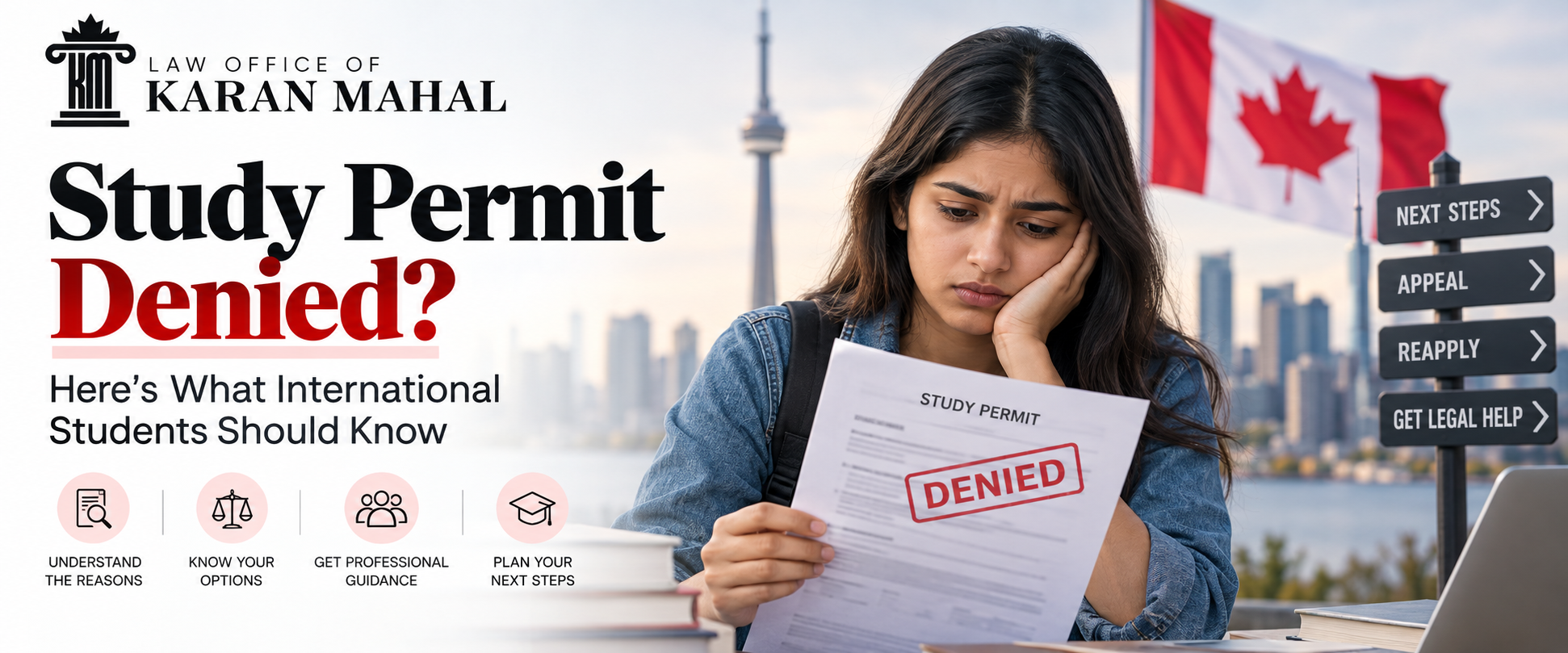
International students apply for Canada’s study permit with broader intentions. They want to make good careers and stay here for a better future. You might have a different objective. But when you see a refusal letter in your email, it’s never a pleasing thing.
A study permit refusal in Canada feels discouraging. It isn’t. IRCC refused nearly 160,000 applications last year. That’s over half of everyone who applied. If your file got rejected, you’re in a large, frustrated crowd, not a small, unlucky one.
Here’s what you need to know.
Why Study Permits for Canada Get Refused
Officers don’t reject files on a whim. They look for specific gaps, and most refusal letters fall into a few clear buckets.
The big one: doubt about your intent to leave.
This single reason accounts for the majority of refusals. Officers need to believe you’ll go home after your studies. No job waiting for you back home or family ties? No property or career path pulling you back? That absence speaks louder than anything you write in your SOP.
Insufficient or Questionable Financial Documentation
The financial proof offered by applicants is one of the most thoroughly reviewed aspects of an application for a study permit. The applicant is required to have enough money to pay for tuition, expenses related to his or her stay in Canada and travel, and not be dependent on any income derived from work done illegally in Canada.
Non-Quebec students need to prove that they have more than CAD 22,895 for their expenses, aside from their tuition payments. The financial documentation provided to the officers is analyzed carefully, and the following elements tend to make the reviewer raise suspicions:
- Large deposits with no explanation
- Bank statements that don’t match your declared income
- A sponsor whose salary can’t realistically support you
The officer is trained to identify such issues, and a good academic record is not enough to compensate for bad financial proof. Applicants should make sure that all financial numbers mentioned in the documentation they provide are supported by evidence and fully explained.
A study plan that reads like a template.
Officers read hundreds of Statements of Purpose a week. They notice when yours sounds copied. Your program, your past education, and your career goals need to connect logically. If they don’t, expect questions.
Attestation letter issues.
Most applicants now need a provincial attestation letter or territorial attestation letter. Wrong letter, expired letter, or a mismatch with your school? That alone can sink an otherwise strong file.
What Does Dual Intent Mean?
This trips up almost every student we talk to. Canadian law lets you hold two intentions at the same time. You can apply for a temporary study permit while also hoping to build a life in Canada down the road. That’s legal. That’s normal. Most international students want exactly this. Read our full guide on dual intent for more.
The problem isn’t having dual intent. The problem is how you present it.
Some students hide their long-term goals completely. That looks evasive to an officer. Others lean too hard into “I want to stay forever,” which raises doubts about whether they’ll actually leave when required. Both mistakes lead to the same result: refusal.
The fix is balance. Show that Canada’s education system genuinely excites you for your future, while also showing you understand and intend to follow your study permit conditions.
This is exactly where a lot of applications fall apart, and exactly where the Law Office of Karan Mahal steps in. We help students frame dual intent the right way, so the officer sees a credible file instead of a confusing one.
Your Options After a Canada Study Permit Refusal
A refusal letter stings. But it’s not the end of the road. You’ve got three real paths forward:
1. Request your GCMS notes.
These are the officer’s actual internal comments on your file. Refusal letters are often vague. GCMS notes tell you the real reason, in the officer’s own words.
2. Reapply, but reapply smart.
A study permit reapply attempt only works if you fix what actually went wrong. Resubmitting the same file with minor edits rarely changes anything. Build new evidence. Strengthen weak sections. Address every point the officer raised, not just the obvious one.
There’s no mandatory waiting period unless your letter states one. But don’t rush back in without real changes. That just invites a second refusal.
3. File for judicial review.
If you believe the decision itself was unfair or unreasonable, you can take it to the Federal Court. This isn’t a second chance at approval. The court only checks whether the process was fair and the decision was reasonable. Deadlines here are strict, so timing matters.
How We Help with Study Permit Refusal in Canada
Handling a study permit refusal in Canada alone is hard. Immigration rules shift constantly, and a generic template pulled from the internet won’t fix a file-specific problem.
At the Law Office of Karan Mahal, we start by reading your refusal letter and GCMS notes line by line. We find the exact weak points. Then we build a stronger, evidence-backed application, whether that means a smarter reapply or a judicial review filing.
We’ve walked many students through second and third attempts that ended in approval. We know what officers look for. We know how to present dual intent so it works in your favor, not against it.
Rebuilding Your Application After a Study Permit Refusal
A refusal doesn’t close the door on your plan to study in Canada. It means something in your file needs stronger evidence or clearer presentation. Most students who get a second approval treat the refusal as specific feedback, not a general setback. They adjust their file accordingly.
Your refusal letter and GCMS notes give you a precise starting point. From there, the goal isn’t just resubmitting paperwork. It’s rebuilding a credible case that addresses what the officer flagged the first time.
Experienced legal counsel makes a real difference here. At the Law Office of Karan Mahal, we help students move from a refused file to a properly prepared reapplication, backed by documentation that holds up under review.